
 Car Excess Insurance
 Short Term Motor Insurance
 Scratch and Dent Insurance
 Tyre & Alloy Wheel Insurance
 Cycle Insurance
 Pothole Insurance


The Renault 5 and how it is changing the way Britain buys EVs
4 March 2026
| 5 minutes
What former Top Gear host James May once referred to as “appalling little snot‑boxes” have evolved significantly, with EVs coming a long way since his remarks in 2009. Mass-market appeal? EVs haven’t quite hit the mark.
Yet, with the odds stacked, the Renault 5 is beginning to elbow its way into the conversation in a way few electric cars have before, earning the title European Car of the Year 2025 from a panel of 60 automotive journalists.
Just over ten years ago, even industry experts were sceptical about electric cars becoming mainstream. “Electric cars won’t catch on,” said Stefan Jacoby, former Volvo CEO, in 2013. “Some niche applications will take off, such as with short-distance taxis, but overall I do not believe electric vehicles will have a role in the next 10-15 years.”
Since its relaunch, the Renault 5 has become one of the surprise success stories of Britain’s EV market with over 60% of registrations from private buyers.
Across the past nine months, the R5 was the most purchased electric car in four of those months. In October, it went further, becoming the best-selling electric vehicle in the UK overall, a standout result for a mainstream hatchback.
The demand shows no sign of slowing either, with nearly 9,000 R5’s having rolled off the assembly line in Renault’s ElectriCity hub in Douai since last spring, and a further 3,000 cars currently on back order as buyers wait for their chosen specifications to be completed overseas.
One of our Youtubers, Natisha Chatten – the automotive expert behind the popular YouTube channel Auto Social UK – describes the Renault 5 as “an EV for people who love cars, not just people who need one,” a sentiment rarely seen in electric vehicles.
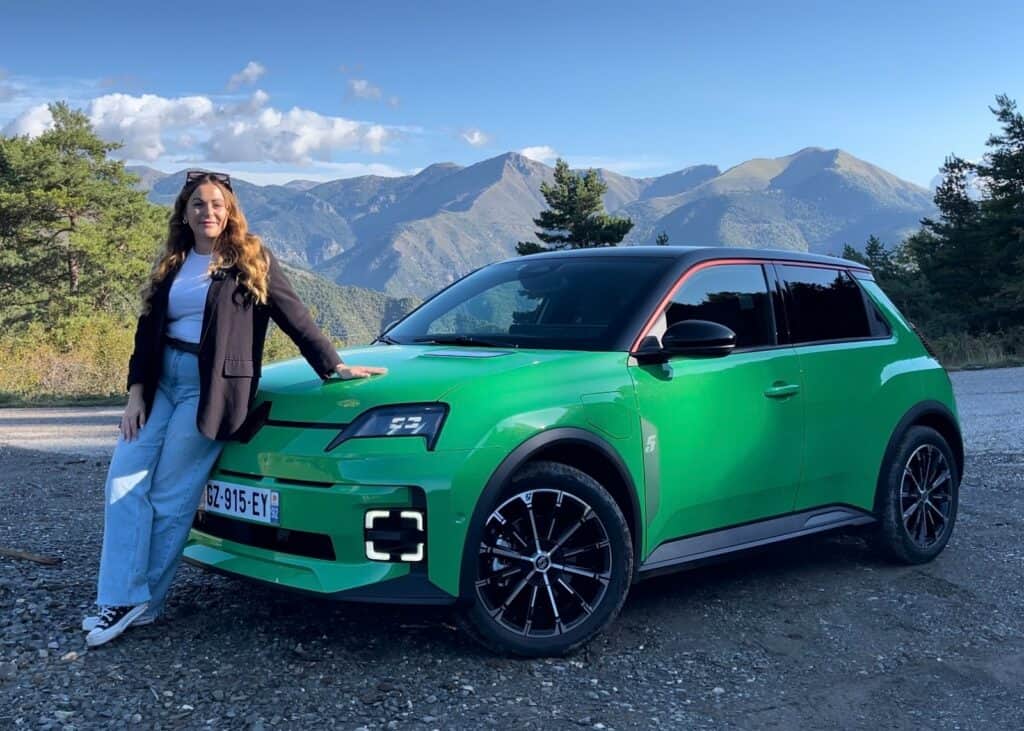
Natisha observes that “people are starting to see EVs simply as cars again, because it feels like a proper, cheerful small hatchback first and an EV second.”
While nostalgia certainly plays a role, Natisha believes the R5 would have succeeded in either form. “There’s a clear hunger for small, characterful cars that spark nostalgia. But being electric actually strengthens its story, as the original was a forward-thinking, accessible people’s car in its time. It works because it doesn’t feel like an appliance; it feels desirable, and that’s a big lesson for rivals.”
Perhaps most telling is who is driving these cars. Simon England, our founder of ALA Insurance says, “It’s rare to see an electric car that appeals so strongly to everyday drivers rather than fleets. For years, fleets and businesses have dominated electric car sales, drawn by tax incentives, bulk discounts, and the need for standardised, reliable vehicles for staff. This could mark a shift.”
The majority of Renault 5 buyers are private customers, a departure from the fleet-heavy trend that has dominated EV adoption. Natisha notes that this points to a return to emotional ownership.
“EV uptake in the UK has leaned heavily on salary sacrifice and company car tax breaks, but the Renault 5’s pricing makes it genuinely attainable for private buyers,” she explains. “When people can choose an EV without relying on incentives, the decision becomes emotional again rather than purely financial.”
Nostalgia certainly contributes, particularly for older buyers with memories of the original, but it is not the sole driver. Younger drivers who never knew the Renault 5 are also drawn to its charm, demonstrating that appeal extends beyond its retro styling.
Natisha cautions that while heritage is important, long-term success depends on factors such as price, range, and driving experience, noting that relying solely on heritage is risky.
With the UK approaching its 2030 EV targets, excitement among drivers is beginning to feel authentic rather than policy-driven. “Policy and tax incentives helped accelerate early adoption, but models like the Renault 5 are generating genuine excitement because they’re affordable and desirable,” Natisha highlights.
She adds that the arrival of more sub-£30,000 EVs that feel fun, are well designed and accessible makes the transition to electric increasingly natural.
The competitive landscape is shifting further as Chinese brands like Jaecoo and BYD enter the market with reliable battery technology, practical software and strong value, all at aggressive price points.
Natisha argues European manufacturers still have an advantage if they can combine emotional design with affordability and long-standing brand trust. “Heritage alone won’t be enough, but it still matters. European brands can absolutely hold their ground if they get the balance right,” she says.